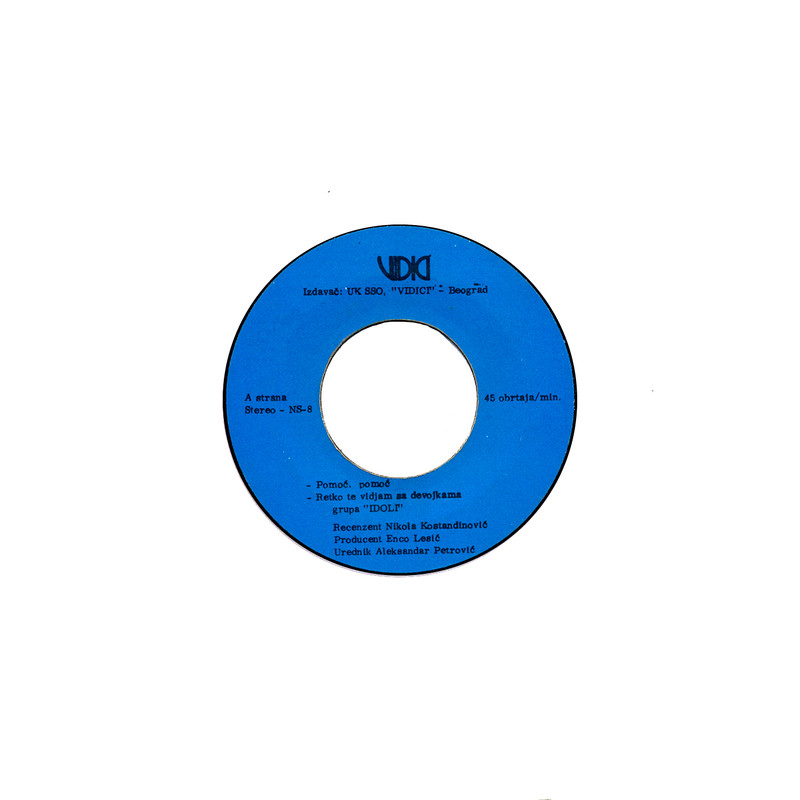
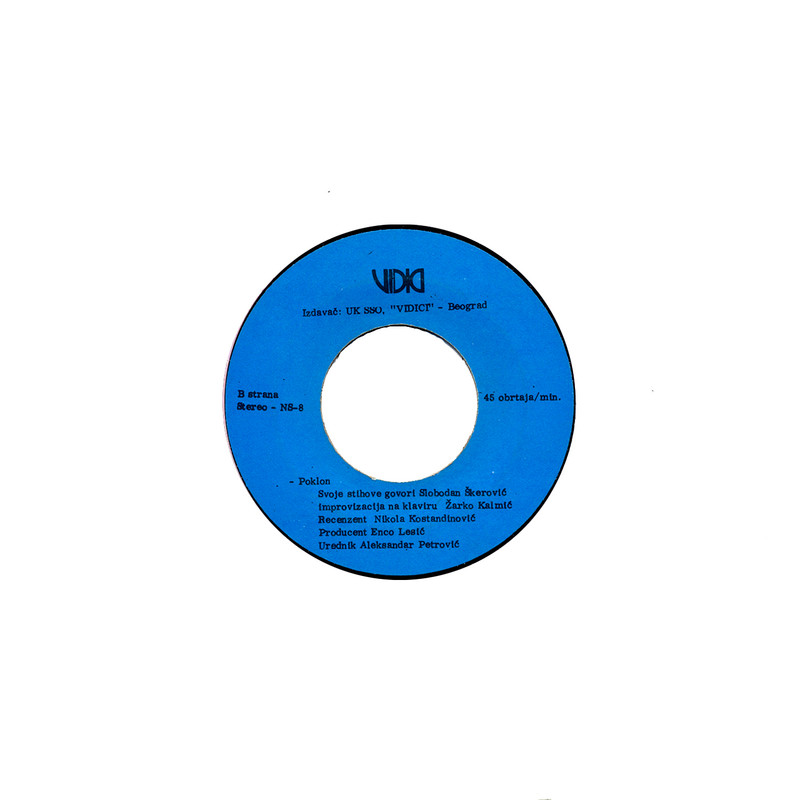
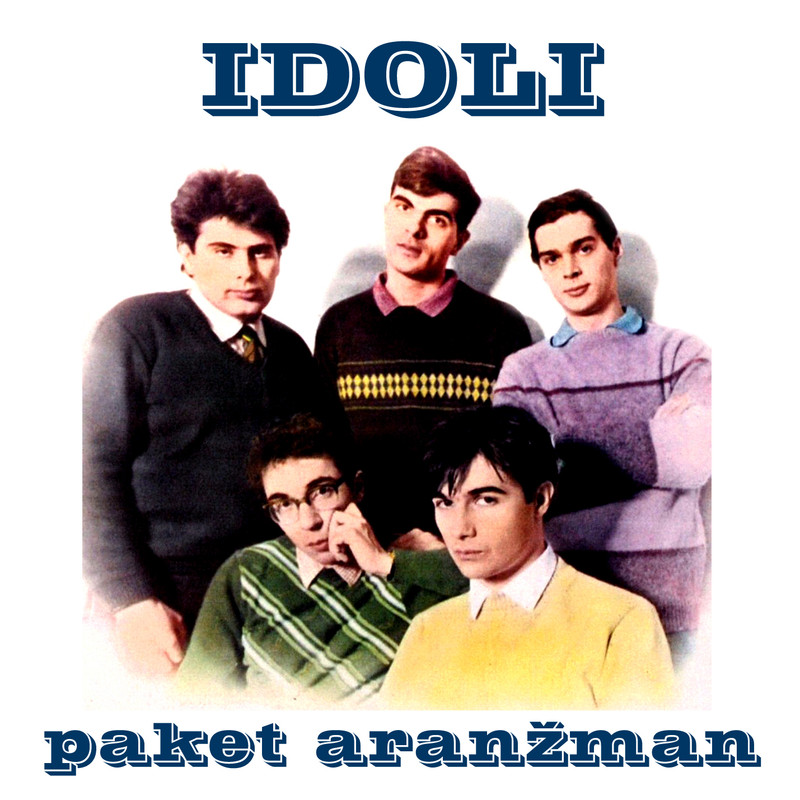
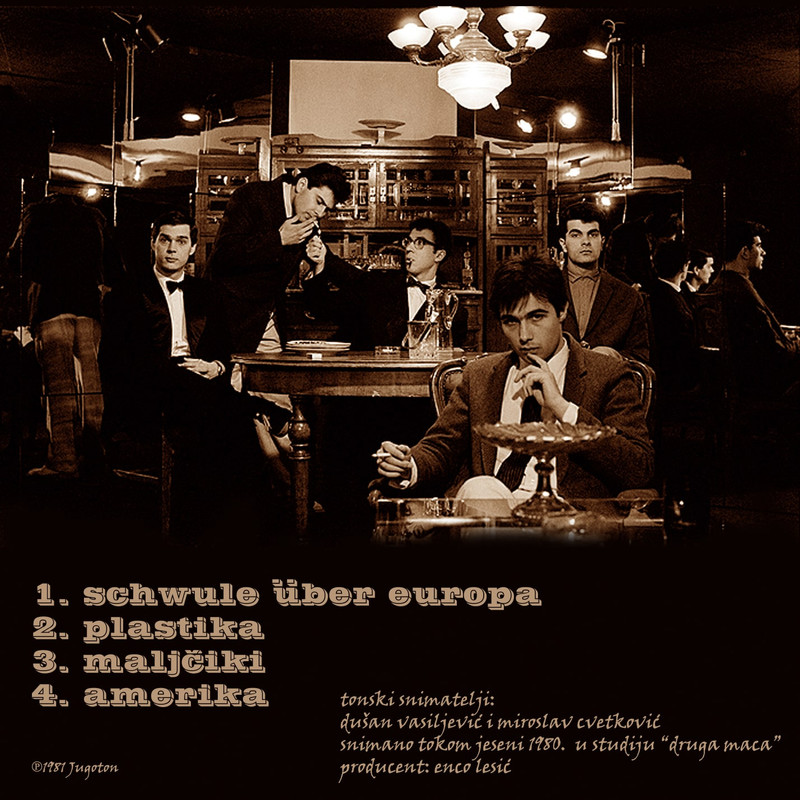
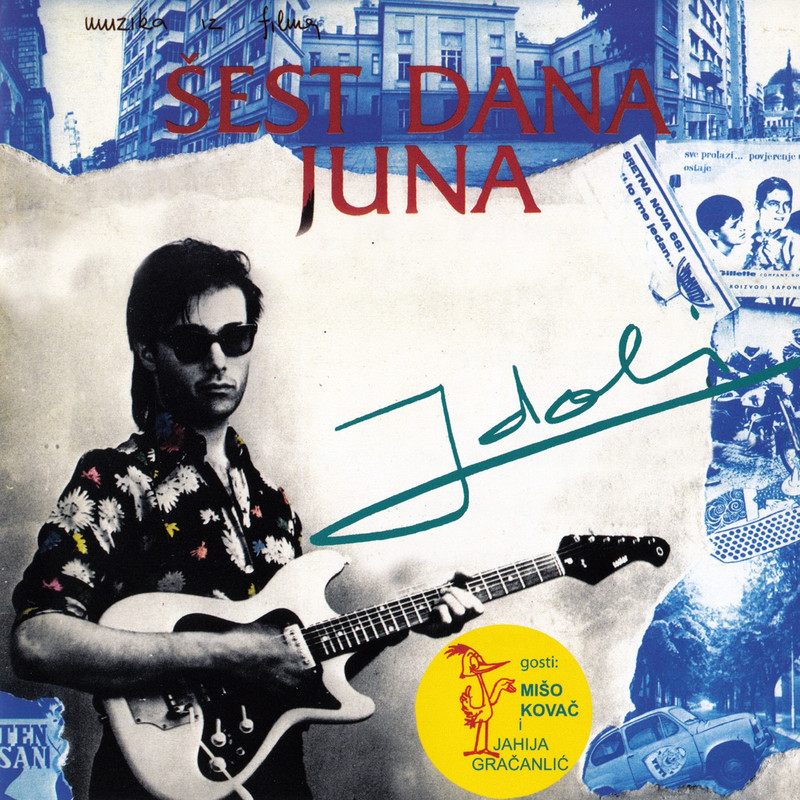
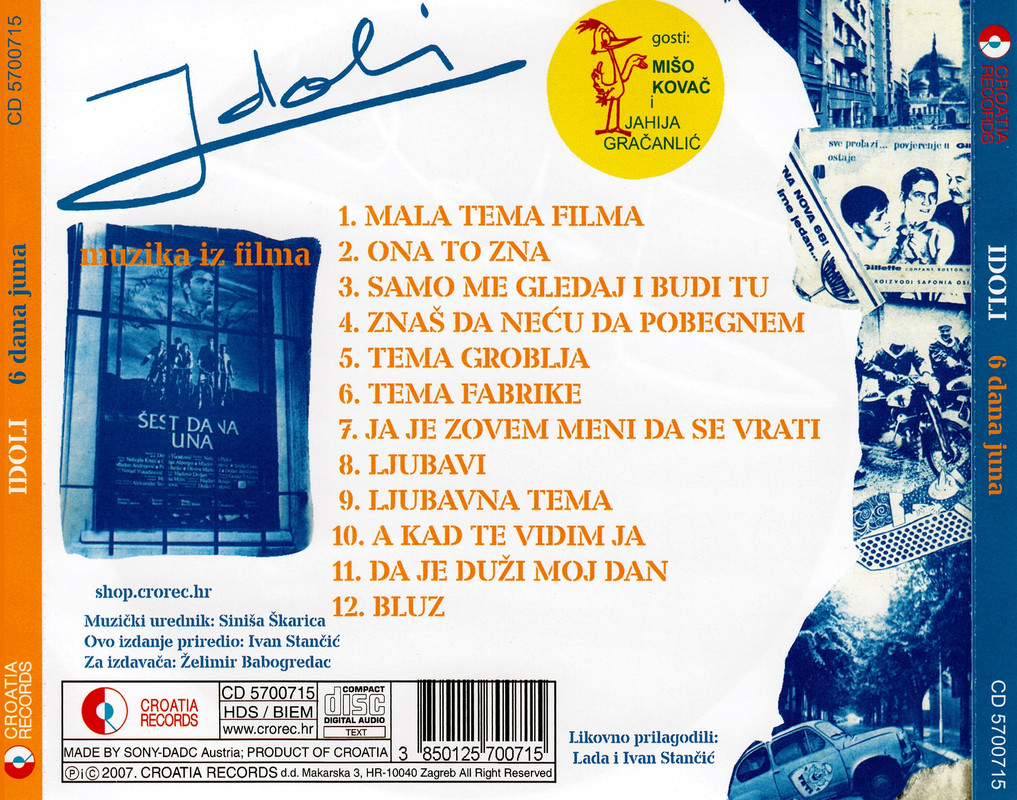
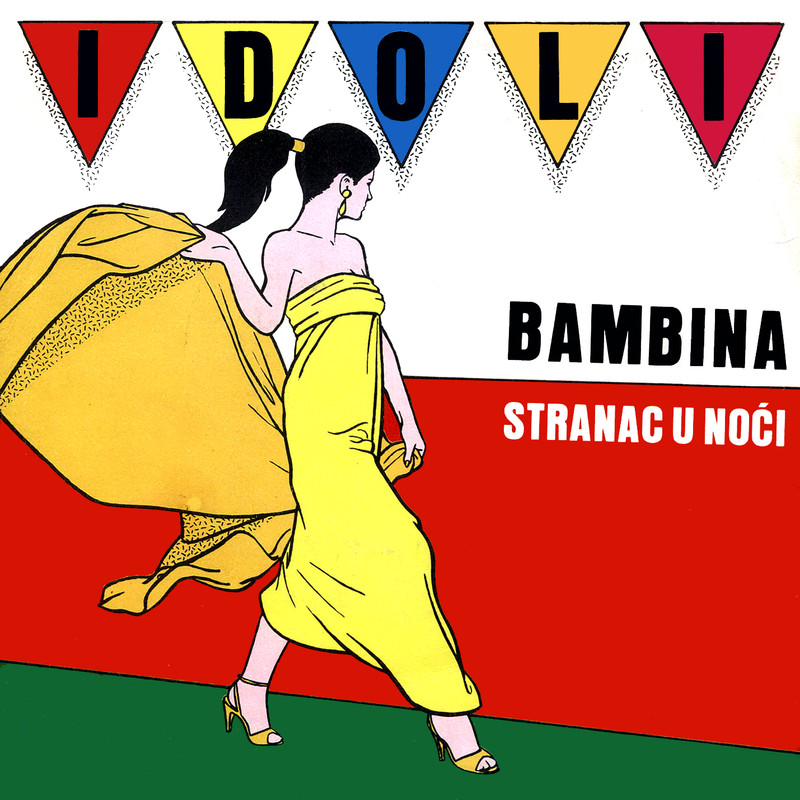
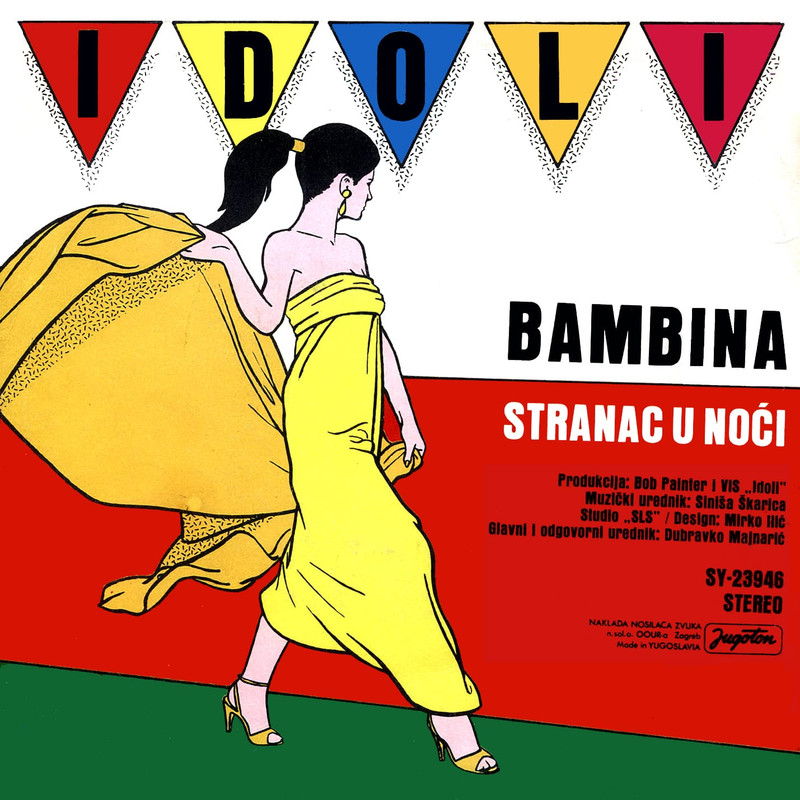
VIS IDOLI was officially formed on March 1, 1980 when the band had their first rehearsal. The first lineup consisted of primary school friends Vlada Divljan (guitar, vocals), Zdenko Kolar (bass), Boža Jovanović (drums) and Divljan's high school friends Srđan Šaper (percussion, vocals) and Nebojša Krstić (percussion). At that time the band collaborated with Dragan Papić who was a kind of media activist. The band manipulated the media very well. For example, they were to announce a change to the band's name on several occasions and the new names would be "Apoloni 5" or "Idoli plus bradonje" because of Kolar and Jovanović's wearing beards. On June 1980, the band made their first live appearance at Belgrade's SKC with the leading Serbian new wave acts. After a month of existence, the band released their first single with a magazine called "Vidici" and it consisted of two tracks, "Pomoć, pomoć" and "Retko te viđam sa devojkama", a song with a gay-hint. Already parting ways with Papić, the band recorded another version of the track as a B-side of "Maljčiki" single, but this time in Zagreb with the producer Goran Bregović. At the 1980 Subotica Youth Festival, where new wave bands from Zagreb and Belgrade met for the first time, they appeared with the track "Zašto su danas devojke ljute?" and got one of the prizes. Idoli, with Električni Orgazam and Šarlo Akrobata participated in the project called "Paket aranžman" with four tracks, "Schwule Über Europa" (a parody on the attitude towards Germans) "Plastika", "Maljčiki" (Russian for "Boys", a parody on Russians) and "Amerika". The promotional video for "Maljčiki" was banned on national television and some radio stations after the Soviet embassy responded. The band had its first independent concert on June 25 at the garden of Belgrade's SKC. The scalpers sold the tickets four times the original price. The opening acts were Bezobrazno Zeleno, VIA Talas, Marko Brecelj and Feo Volarić. The next release was a self-titled EP or mini LP as it was called in former Yugoslavia, featuring six tracks including a cover version of Chuck Berry's "Come On" ("Hajde") and Darko Kraljić's "Devojko mala". Film members Mladen Juričić (also known as Max Wilson) playing harmonica and Jurij Novoselić (also known as Kuzma Videosex) who played organ made guest appearances. The record was produced by another Film member, Ivan Stančić Piko. The cover of the album is the Red Nude by Amedeo Modigliani. Jugoton later re-released the EP with Film's live EP in Kulušić as a compilation album "Zajedno". A tour with Film came in 1981 when they traveled in a boat and played in sea side resorts. In the summer of 1981, a new drummer became Kokan Popović who previously played with Divljan and Kolar in Merlin and Zvuk Ulice. The band started recording their first album in autumn 1981 with Goran Vejvoda and Dušan Mihajlović Spira who ought to have been the assistant producer as they wanted to produce the record by themselves. After a short period Mihajlović left and the only assistance was Mile Miletić Pile. The recording of the album took more than four hundred hours which was a record in former Yugoslavia still to be broken. Guests on the album were Bebi Dol who did backing vocals on "Odbrana", and Vuk Vujačić, Goran Grbić and Slobodan Grozdanović were a brass section on "Senke su drugačije". "Odbrana i poslednji dani" came out in early 1982. It got the name from a Borislav Pekić book with the same title on which the whole album is based. It is a complex concept album dealing with an anthropological approach towards orthodoxy. The track "Poslednji dani" originally entitled "Maršal", dedicated to former Yugoslav president Josip Broz Tito, did not include the last verse due to the record company disapproval. A detail from a cloth on a Saint Nicholas icon was used as the cover and the font used on the record was a Cyrillic font similar to the one used in the Miroslav's Gospel. The band won the best album and the best cover award in 1982. In 1986 Yugoslav rock critics voted "Odbrana i poslednji dani" the best Yugoslav rock album of the 20th century. On July 1982, Zdenko Kolar went to serve in the army and his replacement was Bulevar bassist Branko Isaković. The band started recording a new album in London with producer Bob Painter. Even though they changed their style to pop/rock, "Čokolada" went platinum and the title track became their greatest commercial hit. There was a slight scandal about the track being composed by Dušan Gerzić for the band Via Talas and Šaper presenting it as an Idoli track. However, Gerzić was credited co-author on "Bambina" which was released as a single. For this record Divljan wrote only "Radostan dan", "Vetar i zastave" and "Ja sam tu" (for which Divljan added a verse from Mišo Kovač track "Plakat će zora" written by Drago Britvić) because he was about to graduate mining and geology at the University of Belgrade. At the same time Šaper graduated from his studies in movie directing. Guest appearances on the album were reporter Vivien Goldman who was a guest vocalist and producer Bob Painter who played the keyboards. The original idea was to release a double EP called "U gradu bez sna", but Jugoton refused and released it as a long play album. After performing in Ljubljana, in March 1984, due to conflicts between the members, the band ceased to exist. The last Idoli release was a soundtrack for the movie "Šest dana juna" directed by Dinko Tucaković. (from wikipedia)